
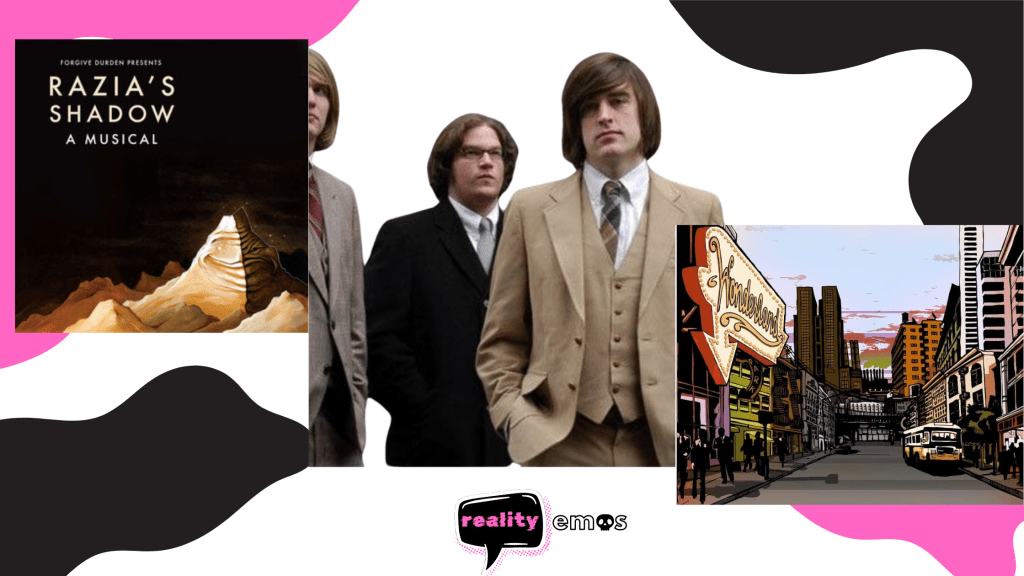

Every so often, a band comes along that dares to color outside the lines, reshaping genres and rewriting what’s possible in music. Enter: Forgive Durden. Known for their razor-sharp lyricism and fearless storytelling, this Seattle-based outfit didn’t just push boundaries; they tore them down. With their magnum opus, Razia’s Shadow: A Musical, Forgive Durden delivered a genre-defying masterpiece that’s part emo, part Broadway, and all heart. Let’s take a deep dive into the band’s history, their audacious musical, and the lasting impression they’ve left on the alt scene.
Who are Forgive Durden?
Forgive Durden emerged in the mid-2000s during the golden era of emo and pop-punk, standing shoulder to shoulder with bands like Panic! at the Disco and The Academy Is… But instead of riding the wave of angsty anthems, they chose a more avant-garde approach. Frontman Thomas Dutton spearheaded the band after his brother and original members left, transitioning Forgive Durden from a group project to a one-man vision with some seriously big ideas.
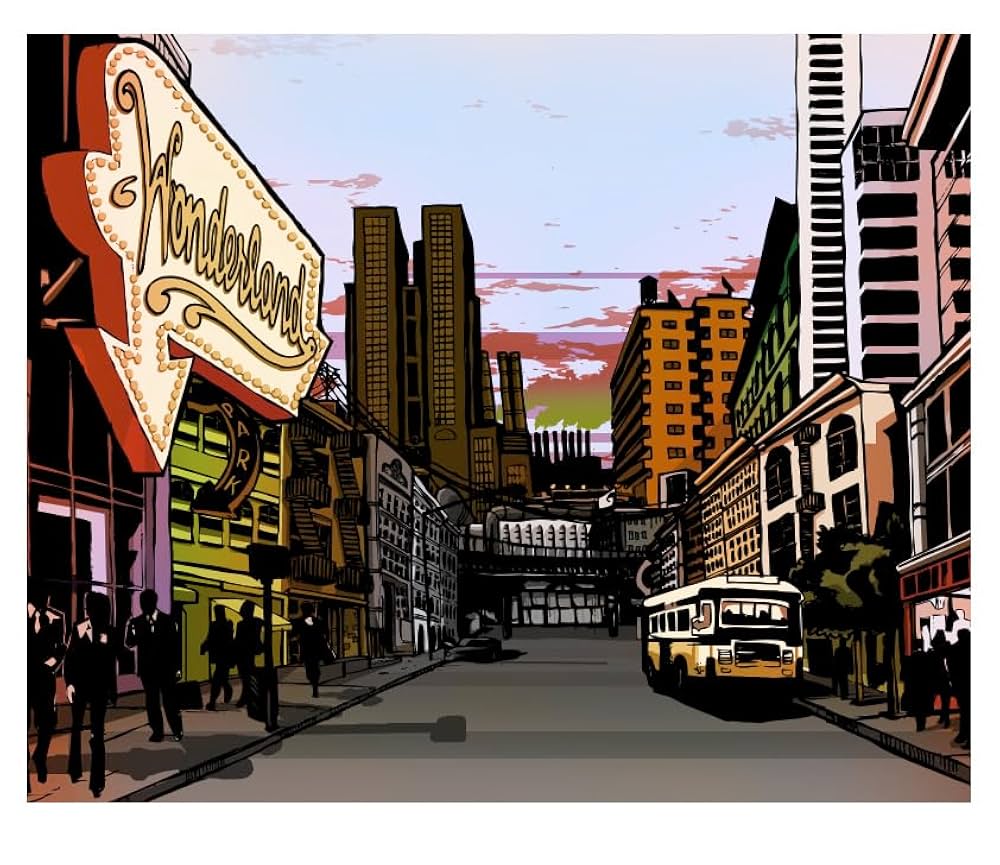
Their early album, Wonderland (2006), hinted at their knack for conceptual storytelling. But no one could have predicted what Dutton would pull off next.
The PUNK ROCK THEATER Masterpiece:
Razia’s Shadow.
Released in 2008, Razia’s Shadow: A Musical is not just an album; it’s an ambitious narrative-driven rock opera with a full-fledged storyline. Think of it as Les Misérables meets Coheed and Cambria. The album features lush orchestration, soaring vocals, and a storyline steeped in moral dilemmas, redemption, and romance. It’s as if someone handed a Tim Burton film to the emo kids and said, “Make this sing.”
Here’s the premise:
The story unfolds in a universe divided between light and dark. Akar, a godlike figure, creates the world but is betrayed by his protégé, Adakias, whose love for a girl named Princess Anhura brings both hope and chaos. Across 13 tracks, the story’s plot twists and moral lessons rival those of classic theater.
And the cast? Stacked. Dutton collaborated with big names in the scene like Brendon Urie (Panic! at the Disco), Max Bemis (Say Anything), and Greta Salpeter (The Hush Sound). Each guest artist brought their own flair, creating a sonic tapestry that feels both eclectic and cohesive.
Key Tracks:
- The Missing Piece: Sets the stage with dramatic flair, introducing the themes of longing and defiance.
- Life is Looking Up: A jubilant, uplifting anthem that doubles as Adakias’ declaration of purpose.
- The End and the Beginning: A heart-wrenching finale that wraps the story in poetic tragedy.
Why It’s Iconic.
Razia’s Shadow was a bold move. In an era when bands were doubling down on radio-friendly singles, Dutton made a full-on musical, complete with character arcs and interwoven melodies. The risk paid off—at least in terms of critical acclaim. Fans were hooked, and the album has since achieved cult status in the emo/alt community.
It also broke ground for what emo could be. No longer was the genre confined to heartache and heartbreak; Dutton showed that it could hold space for epic storytelling and genre fusion. You could mosh and cry to a full orchestra.
Where Are They Now?
After Razia’s Shadow, Dutton stepped back from music, leaving fans wondering if he’d ever return to the spotlight. While Forgive Durden remains on indefinite hiatus, the album’s influence is alive and well.
The album’s ambitious fusion of emo and theatrical elements has resonated within the alternative music scene and Razia’s shadow has even been performed at a few local theaters! Its narrative-driven approach and collaborative spirit have likely influenced artists exploring concept albums and rock operas. For instance, bands like The Dear Hunter, known for their multi-act concept albums, share a similar penchant for storytelling in music. Additionally, the involvement of artists such as Brendon Urie of Panic! at the Disco in Razia’s Shadow suggests a cross-pollination of theatrical influences within the scene.
Why You Should Revisit RAZIA’S SHADOW.
If you’ve never heard Razia’s Shadow or it’s been a while, do yourself a favor and give it a spin. Whether you’re here for the dramatic crescendos, the emo-adjacent nostalgia, or the sheer creativity of it all, this album is a reminder of what happens when artists dare to dream big.
Forgive Durden didn’t just make music; they made magic. And we’re still humming along.
BONUS: A Forgive Durden Playlist by Fueled by Ramen on YouTube
Sources:
- Interviews with Thomas Dutton (Alternative Press, 2008)
- Album liner notes from Razia’s Shadow
- Fan retrospectives on Reddit and Tumblr communities
- AllMusic reviews of Wonderland and Razia’s Shadow
Let’s Chat!
What’s your favorite track from Razia’s Shadow? Or better yet, what would your emo musical be about? Let’s keep the conversation going in the comments below.
Until next time – stay emo, stay dramatic, and keep the music alive.
 RealityEmos
Leave a comment