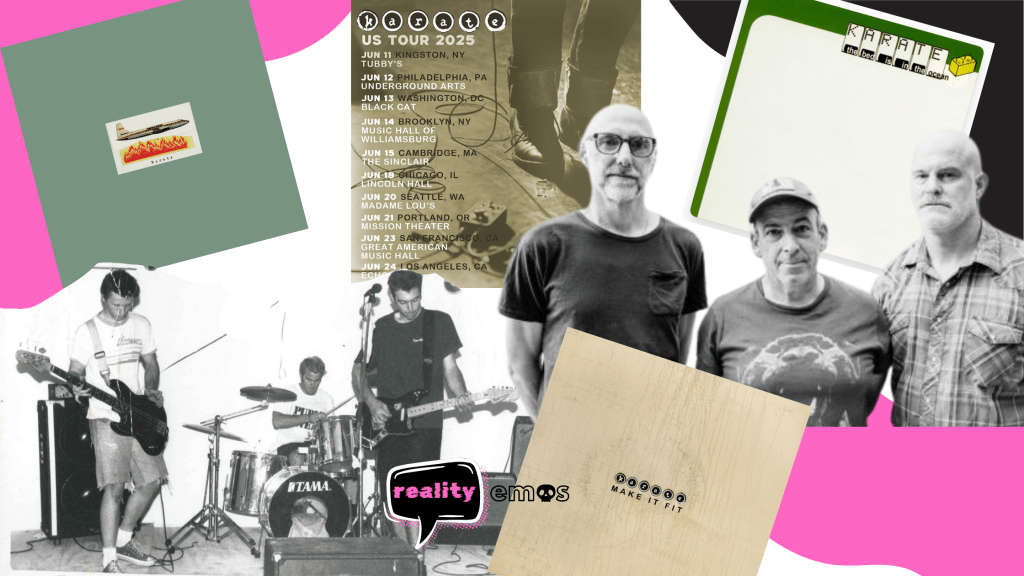

If you’ve ever stumbled upon Karate while digging through dusty emo crates or jazz-tinged indie playlists, you know the feeling: like you’ve uncovered something sacred. Formed in Boston in 1993 by Geoff Farina, Gavin McCarthy, and Eamonn Vitt, Karate was never just another emo band. They were the cool older cousin who introduced you to Fugazi and Miles Davis in the same sitting.
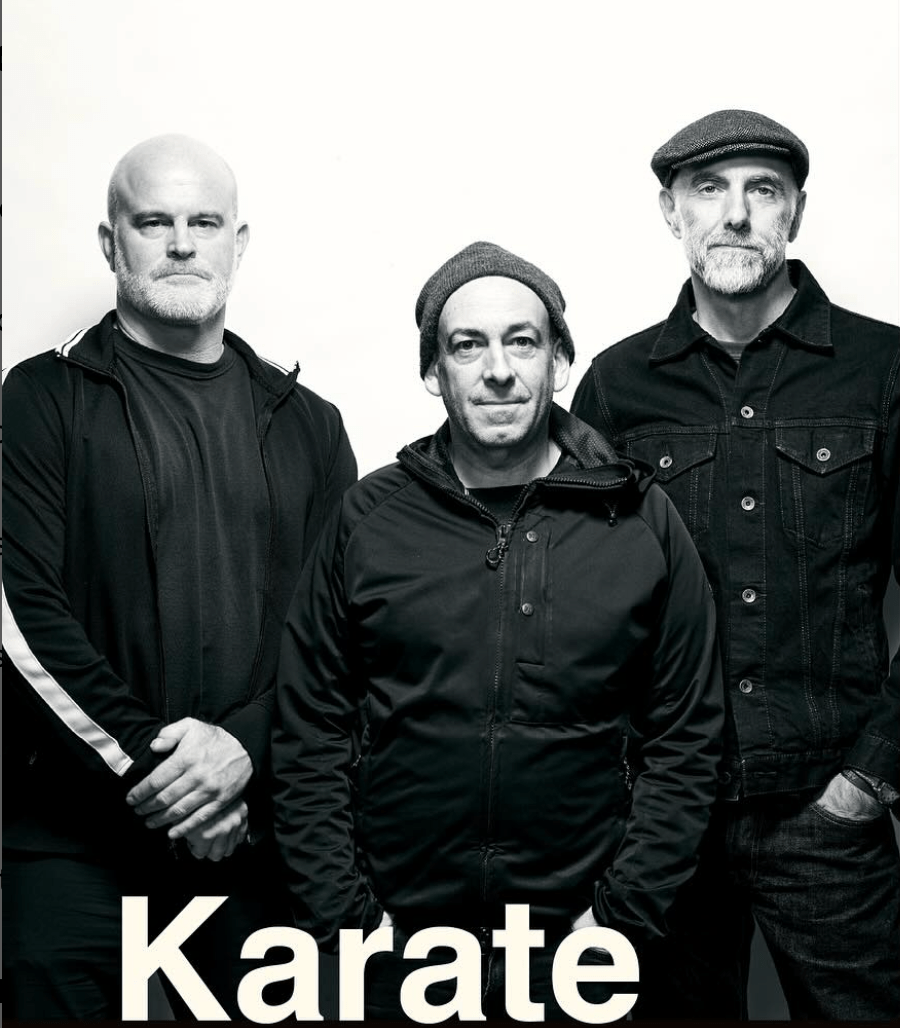
By the time bassist Jeff Goddard joined in 1995, the band had already begun fusing post-hardcore intensity with jazz improvisation, bluesy melancholy, and indie rock minimalism. Their early albums—like In Place of Real Insight (1997) and The Bed Is in the Ocean (1998)—were moody, intricate, and emotionally raw without ever being melodramatic. They felt like an emo band, for people who didn’t want to admit they were into emo bands.
Boston’s blessing to the emo genre
In the early ’90s, Boston’s music scene was a melting pot of genres, and it was here in 1993 that Karate emerged. The band was formed by Geoff Farina (vocals, guitar), Eamonn Vitt (bass, then guitar), and Gavin McCarthy (drums). Farina and McCarthy, both students at Berklee College of Music, bonded over their love of music theory and shared appreciation for jazz and punk, leading to a unique fusion that would define Karate’s sound.
Their early days saw them performing in local venues, where their blend of indie rock, post-hardcore, and jazz began to garner attention. In 1995, Jeff Goddard joined as the bassist, allowing Vitt to switch to second guitar. This lineup change solidified their sound, leading to the release of their self-titled debut album in 1995 – prior to Vitt leaving the band to pursue a career in medicine in 1997.
Over 12 years and six studio albums, Karate toured internationally, quietly cementing their place as one of the most boundary-pushing acts in the alternative underground. Their music was cerebral but never cold, groovy but never flashy—emo for those who loved both Slint and John Coltrane.
New to Karate? Start here:
- “There Are Ghosts” (The Bed Is in the Ocean, 1998): A haunting track that showcases their ability to blend emotive lyrics with intricate instrumentation.
- “Caffeine or Me?” (Unsolved, 2000): This song delves into themes of addiction and identity, wrapped in a lo-fi, contemplative sound.
- “Airport” (Some Boots, 2002): A driving track that balances jazz rhythms with rock riffs.
- Album: The Bed Is in the Ocean (1998): This album is a perfect entry point, capturing the essence of Karate’s genre-blending prowess.
The Sound of Stillness and Storm
Karate’s music was a masterclass in restraint. Farina’s vocals often felt like late-night confessions, while the band’s jazz training allowed them to stretch and contract time like taffy. Songs like “There Are Ghosts” and “Caffeine or Me?” weren’t just tracks—they were moods. It was music you could cry to, study to, or get lost in on a long drive.
But by 2005, after nearly 700 shows across 20 countries, the band called it quits due to Farina’s hearing issues (highly recommend Geoff’s Interview with Veil of Sound here to learn more). Their final show in Rome, Italy in 2005 felt like the end of an era.
The Return we (didn’t know we) needed
Karate made a stunning return in 2022. Their reunion wasn’t just a nostalgic cash grab; it was a thoughtful resurrection that felt deeply intentional and sonically necessary.
In 2024, they released Make It Fit, their first album in over 20 years. The record doesn’t just pick up where they left off—it evolves their sound. Make It Fit is a smoky, layered meditation on age, memory, and the persistence of creativity. Their intro and ending tracks like “Defendants” and “Silence, Sound” combine the band’s signature jazzy intricacies with a more seasoned, contemplative vibe.
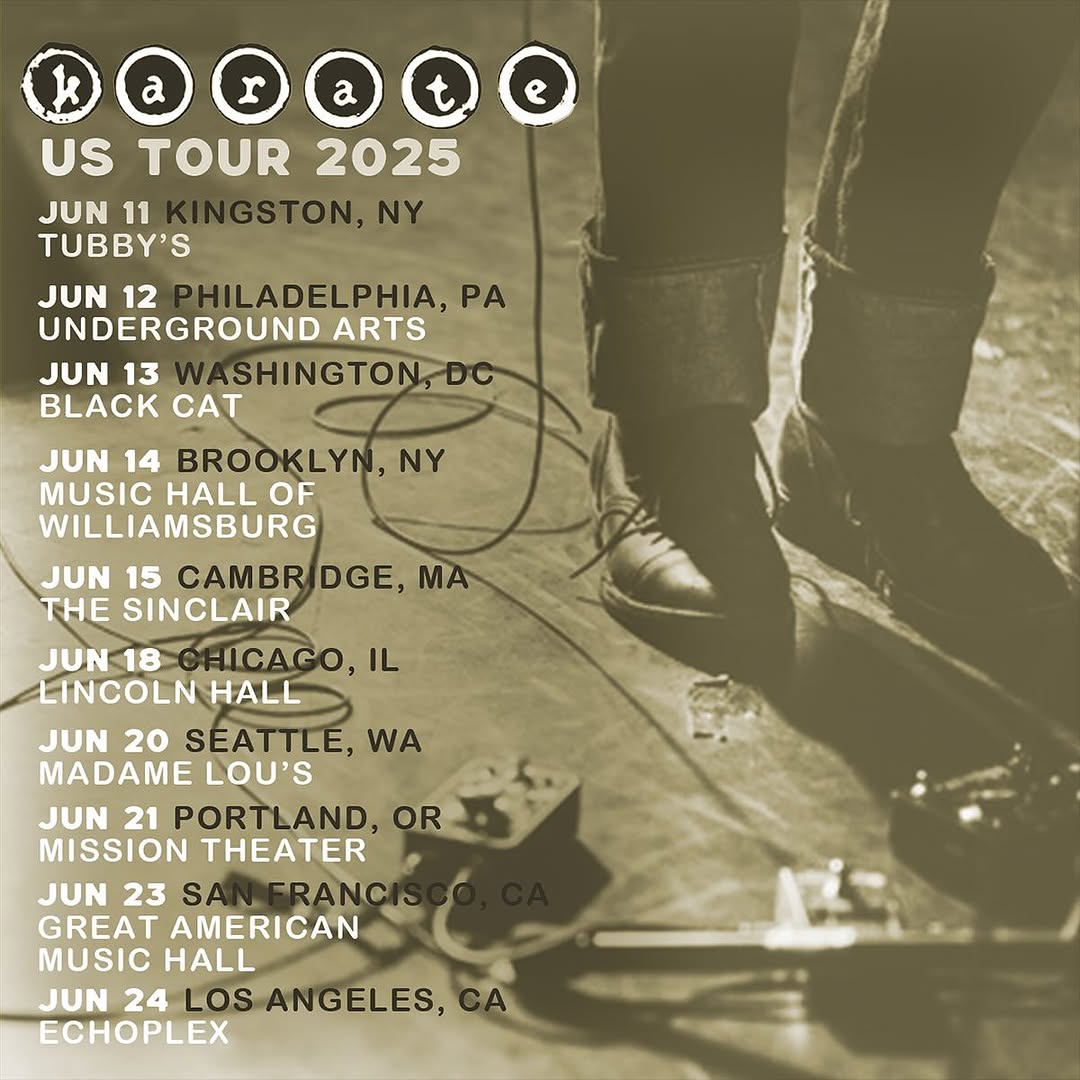
Following the album’s critical acclaim, Karate announced a U.S. tour in 2025. The tour kicks off in June with stops in major cities including New York, Chicago, and Los Angeles, and features performances at key festivals like Pitchfork Music Festival and Treefort. Their live shows are being celebrated for capturing the same quiet intensity that made their late ’90s performances legendary—Farina’s voice and guitar lines as sharp and subdued as ever, supported by the airtight rhythm section of McCarthy and Goddard.
Whether you’re a longtime fan or a curious newcomer, this era of Karate feels like a gift—an intimate encore from one of alternative music’s most quietly influential bands.
WHY is this important?
Karate didn’t just bend genres—they erased the lines altogether. They brought jazz into emo, made post-hardcore sound introspective, and reminded us that you don’t have to scream to be intense. Bands like American Football, and later emo-revival acts owe a debt to Karate’s experimentation.
The band’s willingness to experiment paved the way for future bands to explore beyond traditional genre boundaries. By integrating jazz improvisation into the emo and indie rock framework, they challenged and expanded the expectations of these genres.
Their 2022 reunion and 2024’s surprise album Make It Fit prove they’re more relevant than ever. They’re the kind of band you discover once—and spend the rest of your life telling people about.
Let’s Chat
What are your favorite Karate tracks or albums? How has their music influenced your perception of genre boundaries? Are there contemporary bands you feel carry the torch of Karate’s innovative spirit? Let’s talk all things Karate in the comments—share your thoughts below!
Until next time – Stay emo, stay curious, and keep the music alive.
 RealityEmos
Leave a comment