
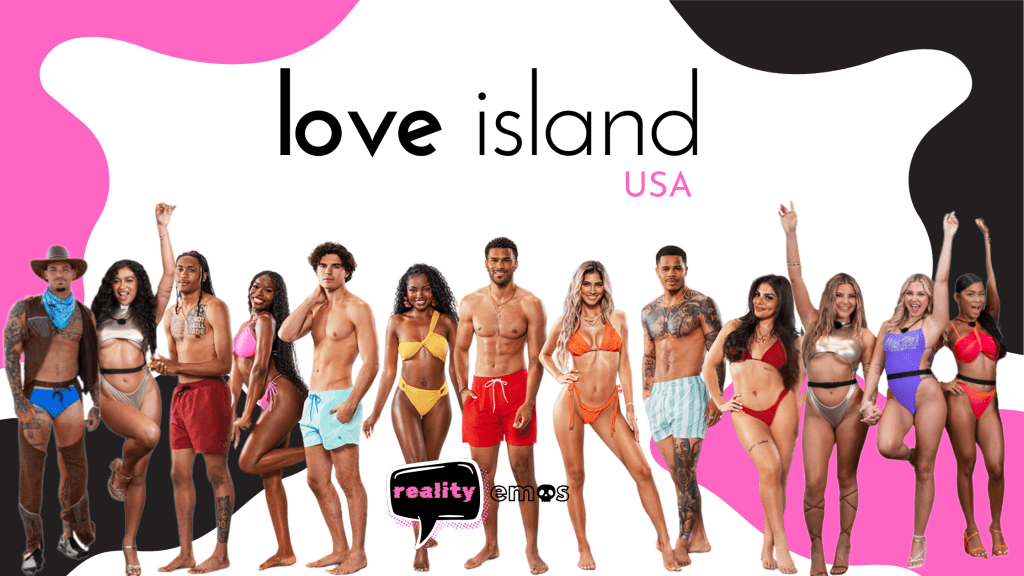

Reality TV is not trash TV – it is elite sociological storytelling, and this season of Love Island USA is the syllabus, the case study, and the group project gone wrong. Welcome to your crash course in how micro-moments lead to macro-meltdowns, and why your fave getting dumped might say more about groupthink and emotional politics than just bad luck.
Here’s what we’ve felt, what the Islanders found, and why it’s got the internet feeling a type of way.
Huda & Jeremiah: Emotional Control Has Consequences
Huda and Jeremiah’s downfall really wasn’t just about compatibility, it was a slow unraveling triggered by one-sided control, emotional manipulation, and deeply questionable power dynamics.

Huda held back key information, specifically that she was a mommy, mamacita…yes – in real life – until Jeremiah had already caught deep feelings. Her decision denied him the full truth he needed to make an informed choice about their future. Had she shared earlier, they might’ve never progressed – or they even might’ve grown stronger. But let’s be honest, she robbed them both of this clarity.
Then came the toxic moments. She publicly belittled him, called him names, and nitpicked his behavior in front of the entire villa. From criticizing his breakfast-making skills, to demanding he eat all his food “because you’re a man,” to mocking his pull-up count, every moment chipped away at Jeremiah’s autonomy and self-worth.
The final straw? After overhearing his genuine vulnerability about his date with Iris, she ambushed him with public humiliation, again calling him names and escalating tension. It wasn’t just controlling, it bordered on emotionally abusive.
The TL;DR Tea: Huda’s behavior is a case study in coercive control, wrapped in the guise of “having standards” and “tough love.” The power imbalance she created mirrors real-world dynamics where one partner chips away at the other’s sense of agency. Love Island’s structure only magnifies it, creating an environment where manipulation is easily exposed, and not always punished.
Hannah’s Love Triangle: Flirtation vs. Fallout
Hannah came into the villa with a clear mission: “I’m here for hot men to pursue me.” And pursue they did. She kept it real, explored her options with both Charlie and Pepe, and played the game as intended. There was no villain arc in her story, just a woman navigating the complexity of island dynamics with confidence (and TBH extreme cuteness).
But her exploration of Pepe caused Charlie to pull back emotionally. Feeling like a second option, Charlie tried connecting with other women, women who, due to their friendships with Hannah, weren’t interested in him. Isolated and misunderstood, Charlie was ultimately voted out by the villa, despite sharing a heartfelt moment with Hannah right before the fire pit. He tried to explain, but Amaya’s emotional reaction took center stage.

With Charlie gone, Hannah finally had the space to explore her connection with Pepe. Just as things were taking off, the girls in the villa voted her out…claiming that Iris and Amaya “deserved” a chance at deep connections, like Hannah had already experienced.
The TL;DR Tea: Hannah’s journey spotlights the double standards women face in spaces of romantic autonomy. Her confidence in exploring her options made her a threat, not just romantically but socially. The girls’ rationale for her elimination reveals how jealousy and group dynamics can masquerade as fairness. It’s a sharp look into how perceived abundance can be punished—even when earned.
Jeremiah’s Elimination: Groupthink, Power Moves & Misread Signals
We’ll never forget the day when America had the chance to vote for their favorite boys and girls and somehow, Huda landed in the top 4. This most likely signaled to the villa that America sided with Huda in her toxic dynamic with Jeremiah, or that there were things we saw that the villa wasn’t privy to – a tale as old as time on Love Island.

Whether this was seen as validation of Huda’s behavior or just a case of Jeremiah being misunderstood, it tilted the power dynamic. The villa boys – Taylor, Nic, and Ace – took it as a cue that Jeremiah was not a fan favorite. Or worse, they may have seen Jeremiah as a threat – either to win the entire show, or for his budding connection with Andreina.
America’s failure to vote Jeremiah into the top 3 essentially handed the villa a loaded weapon…and they pulled the trigger.
The TL;DR Tea: This elimination mirrors real-world failures in the democratic system. It’s giving 2024 election déjà vu, where not enough people showed up for VP Kamala Harris, and it ushered in someone nobody really wanted (cough Austin = Trump). Here, Jeremiah was ousted not by villainy, but by American apathy and villa misinterpretation. The result of this vote? America got mad. Very mad. And the backlash to the villa’s choice proved that silence can be just as destructive as action.
Let’s Recap: 3 Sociological Themes Playing Out in Real Time
1. Perception as Power
How you’re seen matters more than how you are. Huda’s top-4 placement told the villa a story—whether accurate or not—that Jeremiah was the villain. That perception shaped votes and changed fates. It’s a reminder that on Love Island, and in real life, optics often override truth.
2. Gendered Double Standards in Autonomy
Hannah’s open exploration was honest, but it cost her. Meanwhile, male islanders routinely explore without backlash. Her exit reveals how women still get penalized for pursuing pleasure or emotional agency. Confidence is threatening ,when it’s not male-controlled.
3. The Myth of Democratic Consensus
Jeremiah’s elimination shows what happens when public input is misunderstood or weaponized. The villa used America’s silence as consent—and it backfired. It’s reality TV’s version of voter apathy: the consequences are real, even if the votes weren’t malicious.
This season of Love Island proves the show is more than watching hot people in swimsuits, it’s a sociological soap opera. Every kiss, side-eye, and recoupling is a study in how social dynamics create, crush, and expose human behavior.
Let’s Chat!
- Was Jeremiah a victim of bad vibes or bad strategy?
- Did Huda sabotage her own connection?
- Was Hannah punished for doing the exact thing the game encourages?
- Is this season of Love Island lowkey a metaphor for broken democracy?
Until next time – Stay emo, stay perceptive, and keep the music alive.
 RealityEmos
Leave a comment